What Working with Our Dover Crew in Rockaway Looks Like
The first 5 minutes of a Rockaway restoration call usually decide how the next 30 days unfold. A real dispatcher answers, captures the cause-of-loss summary in plain language, gets the property address and the access logistics, and sends a truck before we hang up. The information we gather on that initial call lets the crew skip the discovery phase on arrival and go straight into source-control + extraction.
For active emergencies — pipe burst, sewage backup, fire aftermath, storm intrusion through a damaged building envelope — our standard target is on-site within the hour anywhere we cover. Rockaway sits roughly 2 miles from our Dover base, so on a normal-traffic day that translates to 10 to 20 minutes door-to-door. Storm season we pre-stage equipment for surge events so individual response times do not slip even when call volume spikes across the corridor.
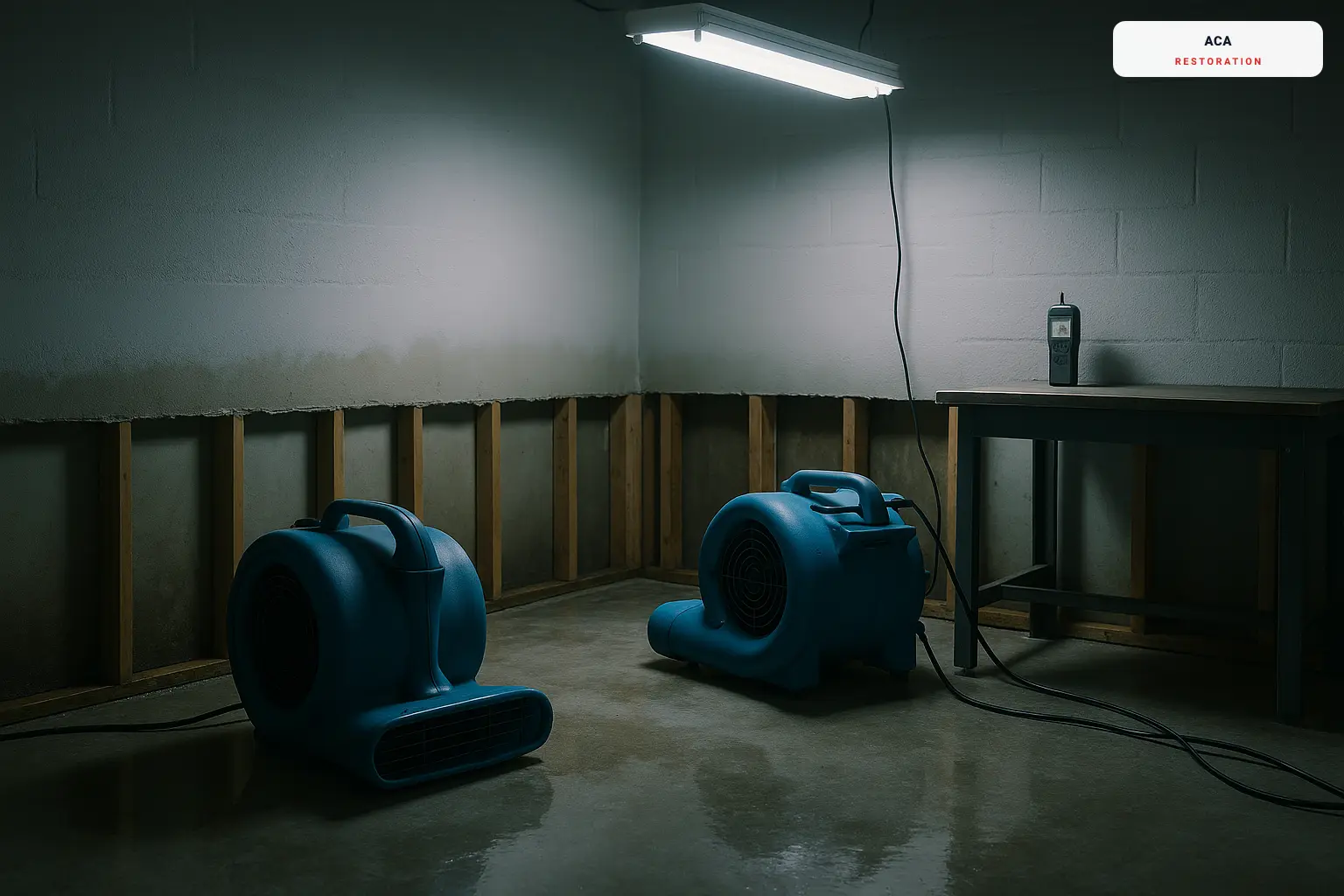
The on-site sequence: shut off the source, document the damage with photos and moisture readings, deploy extraction and drying equipment sized to the loss, monitor daily until each substrate returns to dry-standard. Reconstruction picks up on the back end with the same crew, scoped from the same Xactimate that mitigation produced. No handoff between mitigation and rebuild contractors, no separate negotiation, no scope-gap that the homeowner has to bridge.
Insurance scope handling in Rockaway
Insurance documentation on Morris County losses gets handled the way the major carriers actually want it: photos of every wet substrate before equipment deploys, moisture readings logged daily against a labeled building diagram, line-item Xactimate for both mitigation phase and reconstruction phase, and a written cause-of-loss narrative that frames the event correctly for the policy. Direct carrier billing once authorization is on file means you are not floating mitigation costs while the claim works through adjusting.